

 Tiếng Việt
 中文 (中国)
Global Lime Business Expands as Steel, Mining, Construction and Water Treatment Drive Demand
The global lime industry is entering a period of steady expansion as demand continues to rise across steelmaking, mining and metallurgy, construction, water treatment, chemical processing and environmental applications.
Recent market research estimates that the global lime market will reach approximately USD 47.4 billion in 2026, up from USD 46.68 billion in 2025, and could reach around USD 56.64 billion by 2034, representing an annual growth rate of approximately 2.7%. Asia Pacific remains the dominant regional market, accounting for more than 66% of global market value in 2025.
Quicklime Remains the Core Industrial Product
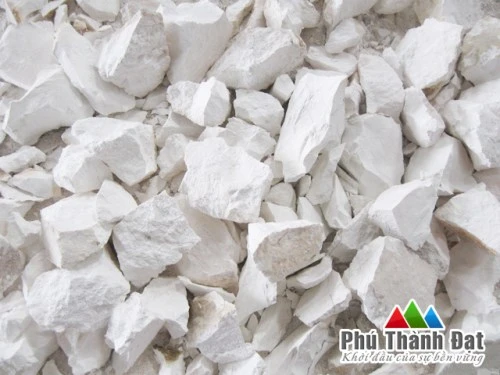
Quicklime, or calcium oxide (CaO), remains one of the most important products in the global lime industry. It is produced by heating limestone at high temperatures and is widely used where high reactivity and alkaline properties are required.
The global quicklime market alone was valued at approximately USD 33.6 billion in 2025 and is projected to reach about USD 42.6 billion by 2034. Asia Pacific accounted for approximately 66% of the market in 2025.
The largest demand comes from industrial sectors, particularly steel manufacturing and mining & metallurgy. In steelmaking, quicklime is used as a flux to remove impurities and form slag during the production process. It is also important in the processing of non-ferrous metals and mineral ores.
Steel Industry Remains a Major Consumer
Steel production continues to be one of the most important drivers of lime consumption worldwide. Lime is essential for controlling impurities during steelmaking and improving the efficiency of metallurgical processes.
According to industry information from the National Lime Association, steel manufacturing remains the largest single application for lime, while environmental applications are among the fastest-growing areas of demand.
This creates continuing opportunities for lime producers and suppliers serving integrated steel mills, electric arc furnace operations, foundries and metal-processing facilities.
Mining Creates Additional Opportunities
Mining and metallurgy are another major growth area for lime. Quicklime and hydrated lime are used in mineral processing, pH control, flotation, impurity removal and the processing of ores such as copper, gold, zinc and other metals.
Growing investment in mining projects, particularly across Asia, Latin America, Africa and Southeast Asia, is therefore supporting demand for industrial-grade lime.
Water Treatment and Environmental Applications Grow
Environmental applications are becoming increasingly important for the lime industry.
Lime and hydrated lime are used in municipal and industrial wastewater treatment, drinking-water treatment, sludge stabilization, acid neutralization and the removal of certain contaminants and heavy metals.
The product is also used in flue-gas treatment and other pollution-control processes. Increasing environmental regulations are encouraging industrial facilities and municipalities to invest in treatment systems, creating additional demand for lime-based products.
Construction and Infrastructure Support Long-Term Demand
Construction remains another important market for lime. Lime is used in soil stabilization, road construction, foundations, mortars, plasters and other building-material applications.
Infrastructure development in emerging economies is expected to provide a relatively stable source of demand, particularly where governments are investing in roads, industrial parks, housing and urban infrastructure.
Asia Pacific Leads the Global Lime Industry
Asia Pacific currently represents the largest regional market for lime. Strong steel production, mining activity, infrastructure development and industrial expansion in countries such as China, India, Japan and Southeast Asian economies underpin regional demand.
For international suppliers, Southeast Asia is becoming an increasingly interesting market because of its growing manufacturing base, steel and metal industries, construction projects, mining operations and water-treatment investments.
Supply Chain and Quality Become More Important
While demand is growing, lime is also a product where quality, consistency, logistics and delivery reliability can have a significant impact on industrial customers.
For buyers, important purchasing specifications can include:
- Available CaO content
- Reactivity
- MgO and SiO₂ levels
- Loss on ignition (LOI)
- Particle size
- Moisture content
- Bulk density
- Packaging options
- Monthly supply capacity
- Loading port and delivery terms
- Certificates of analysis and quality documentation
Because quicklime reacts with moisture and carbon dioxide during storage and transportation, efficient logistics and proper storage are particularly important for international trade.
Outlook: Stable Growth With Multiple Industrial Drivers
The global lime business is expected to maintain steady growth over the coming years. Demand is supported not by a single industry, but by several interconnected sectors—including steel, mining, construction, chemicals, water treatment and environmental protection.
For producers and exporters, this diversification provides opportunities to develop long-term contracts with industrial consumers and distributors.
For buyers, meanwhile, the increasing importance of reliable supply, consistent chemical specifications and competitive logistics is likely to make supplier selection an increasingly strategic part of lime procurement.
With Asia Pacific continuing to dominate global consumption and industrial applications expanding worldwide, lime is expected to remain a critical mineral-based industrial material throughout the next decade.