

 Tiếng Việt
 中文 (中国)
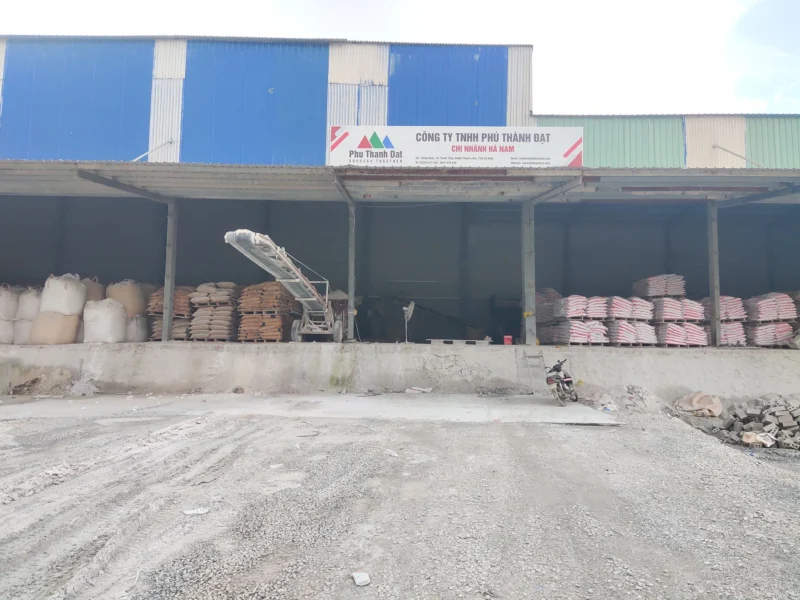
Outlook for Vietnam’s Lime Business: Strong Growth Potential Amid Rising Industrial Demand
Vietnam’s lime industry is entering a period of promising development, supported by the country’s abundant limestone resources, expanding industrial base and growing demand for quicklime (CaO), hydrated lime [Ca(OH)₂] and limestone products.
The outlook is particularly attractive for producers and exporters that can provide consistent quality, competitive pricing and reliable international logistics.
Strong Resource Advantage
Vietnam has significant limestone deposits, providing a strong raw-material foundation for lime production. Major limestone-producing areas in northern Vietnam, including Hà Nam and surrounding provinces, have developed clusters of quarrying, processing and mineral-product manufacturing.
The production chain is relatively straightforward: high-calcium limestone is processed and calcined at temperatures above 900°C to produce quicklime, which can then be hydrated to produce hydrated lime.
This resource advantage allows Vietnamese producers to compete not only in the domestic market but also in regional export markets.
Steel Industry Remains a Key Demand Driver
One of the most important opportunities for Vietnam’s lime industry is the steel sector.
Quicklime is widely used in steelmaking as a flux and helps remove impurities during the refining process. Vietnamese mineral producers are increasingly positioning quicklime specifically for steelmaking applications, reflecting the importance of this market.
As Vietnam continues developing its manufacturing and infrastructure industries, demand for steel and associated raw materials could provide a stable market for industrial-grade quicklime.
Export Opportunities Are Expanding
Vietnam is also becoming an increasingly visible supplier of lime products to neighboring Asian markets.
The Philippines is a notable example. Trade data cited by Vietnamese mineral producers indicates that Vietnam exported approximately US$16.78 million of quicklime, slaked lime and hydraulic lime to the Philippines in 2024. In 2023, Vietnam accounted for around 55% of Philippine imports in the relevant HS 2522 lime category, with exports valued at approximately US$12.9 million.
Vietnamese producers have also reported shipments of hydrated lime to international customers, demonstrating that export-oriented production is already an established part of the industry.
Beyond Steel: Multiple End-Use Industries
The future of Vietnam’s lime business is not dependent on steel alone. Lime is used in a broad range of industries, including:
- Steel and metallurgy
- Water and wastewater treatment
- Construction and building materials
- Cement and concrete
- Mining and mineral processing
- Chemical manufacturing
- Pulp and paper
- Environmental treatment
- Agriculture and soil treatment
This diversification gives Vietnamese lime producers opportunities to reduce dependence on any single downstream sector.
Infrastructure and Industrial Development Support Demand
Vietnam’s continued industrialization and infrastructure development should provide additional opportunities for lime suppliers. At the same time, Vietnam’s cement and clinker industry remains a major industrial sector, although exports faced higher logistics costs and international competition in early 2026. Vietnam exported approximately 9.94 million tonnes of cement and clinker in Q1 2026, valued at about US$355.84 million.
For lime producers, this highlights both an opportunity and a challenge: industrial demand is substantial, but exporters must remain competitive on production cost, energy efficiency and freight.
Environmental Pressure Will Shape the Industry
The biggest long-term challenge for lime producers is likely to be the environmental cost of calcination.
Producing quicklime requires high-temperature kilns and releases CO₂ both from fuel consumption and from the chemical decomposition of limestone. As environmental standards become stricter, Vietnamese producers will increasingly need to invest in:
- More energy-efficient lime kilns
- Better fuel management
- Emission-control systems
- Renewable or lower-carbon energy
- Improved production efficiency
- Environmental monitoring and compliance
This could gradually favor larger and more technologically advanced producers.
Outlook: Positive, but Competition Will Increase
Overall, the outlook for Vietnam’s lime business is positive.
Vietnam possesses three important advantages: abundant limestone resources, a growing industrial customer base and geographic proximity to major Asian markets. Existing export activity to markets such as the Philippines demonstrates that Vietnamese lime can compete internationally.
However, competition from China and other regional suppliers, fluctuations in energy and shipping costs, environmental requirements and the need for consistent CaO quality will put pressure on producers.
The strongest opportunities through 2026 and beyond are likely to be in high-quality quicklime for steelmaking, hydrated lime for water treatment and industrial applications, and export-oriented supply to Southeast and South Asian markets.
For Vietnamese producers, the next stage of growth will therefore depend less on simply having limestone resources and more on the ability to convert those resources into high-quality, consistent, competitively priced and environmentally compliant lime products.
Business perspective: For companies looking to sell Vietnamese quicklime overseas, the most attractive targets are likely to be steel mills, mining companies, water-treatment companies, chemical manufacturers, paper mills, cement producers and industrial distributors in the Philippines, Bangladesh, Indonesia, Malaysia, Cambodia and other Asian markets.