

 Tiếng Việt
 中文 (中国)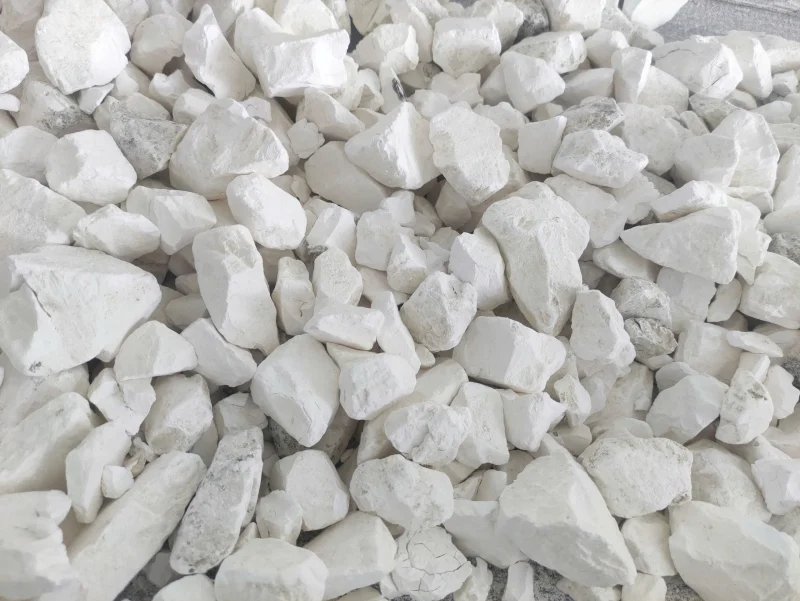
Limestone and Other Lime-Based Materials: Essential Minerals Supporting Modern Industry
Limestone and lime-based materials continue to play a critical role across construction, steelmaking, environmental treatment, agriculture, and chemical manufacturing. Although limestone is one of the most widely available mineral resources, its conversion into higher-value products such as quicklime, hydrated lime, calcium carbonate and dolomite lime makes it an important industrial supply chain.
The versatility of these materials is driving continued demand as industries seek reliable mineral inputs for manufacturing, infrastructure development and environmental applications.
Limestone: The Foundation of Lime-Based Products
Limestone is primarily composed of calcium carbonate (CaCO₃). Through controlled processing and calcination, limestone can be transformed into several important products.
The main lime-based materials include:
- Limestone: Used directly in construction, cement production, steelmaking, agriculture and industrial applications.
- Quicklime (Calcium Oxide – CaO): Produced by heating limestone at high temperatures. It is widely used in steelmaking, water treatment and chemical processing.
- Hydrated Lime (Calcium Hydroxide – Ca(OH)₂): Produced by adding water to quicklime and used in construction, wastewater treatment, flue-gas treatment and various industrial processes.
- Calcium Carbonate (CaCO₃): Available in ground or precipitated forms and used in plastics, paper, paint, rubber, adhesives and other manufacturing industries.
- Dolomite and Dolomitic Lime: Important sources of calcium and magnesium, with applications in metallurgy, construction and agriculture.
Strong Role in the Steel Industry
Steelmaking remains one of the most important industrial applications for lime.
Lime acts as a fluxing and refining material, helping remove impurities such as silica, phosphorus and sulfur from molten metal. Limestone and lime are used in different stages of iron and steel production, including blast furnaces and basic oxygen or electric-arc furnace processes.
For steel producers, product consistency is particularly important. Chemical composition, CaO content, particle size, reactivity and impurity levels can influence furnace performance and slag formation.
As steel production expands in Asia, demand for consistent-quality metallurgical limestone and quicklime is expected to remain an important part of the mineral supply chain.
Growing Environmental Applications
Beyond metallurgy and construction, lime is increasingly important for environmental management.
Lime can be used in drinking-water treatment, wastewater treatment, air-pollution control and solid-waste management. The National Lime Association identifies environmental applications as one of the fastest-growing areas for lime consumption.
Hydrated lime, for example, can be used to adjust pH and neutralize acidic streams, while lime-based materials can contribute to the treatment of industrial wastewater and emissions.
This creates opportunities for lime producers that can supply products with controlled chemical and physical specifications for specialized environmental applications.
Construction Remains a Major Market
Limestone and lime are also closely connected with the construction sector.
Limestone is an important raw material for cement and aggregates, while lime can be used in mortar, plaster, asphalt modification and soil stabilization. Lime stabilization is particularly useful for improving the engineering properties of certain soils used in roads, foundations and other infrastructure projects.
The combination of infrastructure development and urbanization in Asia continues to support demand for limestone-derived construction materials.
Vietnam’s Opportunity in Lime-Based Materials
Vietnam has significant limestone resources and an established mineral-processing industry, giving the country a strong foundation for producing and exporting limestone and lime-based materials.
Vietnam’s construction-material strategy has also emphasized more efficient utilization of limestone and dolomite resources while encouraging diversification into products such as calcium lime, dolomite lime, calcined dolomite lime, hydrated lime powder and calcium carbonate.
Vietnamese suppliers are already offering products including limestone, industrial calcium carbonate, quicklime, hydrated lime and dolomite for domestic and international markets.
This creates opportunities to move beyond the export of basic raw limestone toward higher-value processed mineral products.
Quality and Sustainability Become Increasingly Important
While demand remains strong, the lime industry faces growing pressure to improve energy efficiency and environmental performance.
Lime production requires high-temperature calcination, which consumes energy and generates carbon dioxide. Producers therefore have incentives to improve kiln efficiency, optimize fuel consumption, reduce dust emissions and increase process automation.
Vietnam’s industrial-material strategy includes targets for energy efficiency and environmental controls in lime production, including requirements related to emissions monitoring and waste treatment.
For international buyers, this means that purchasing decisions are increasingly based not only on price but also on:
CaO content | MgO content | SiO₂ | sulfur | particle size | reactivity | moisture | packaging | certificates | production consistency | logistics
Outlook for Limestone and Lime-Based Materials
The global limestone market is expected to continue expanding, supported by construction activity, cement production, steelmaking and environmental applications. A 2026 market outlook also points to continued growth in Southeast Asia and additional demand associated with environmental applications.
For producers and exporters, the greatest opportunity may be in supplying consistent, specification-based products rather than commodities alone.
Quicklime, hydrated lime, calcium carbonate, dolomite lime and other processed materials can serve specialized customers across steel, mining, construction, water treatment, chemical manufacturing, agriculture and environmental industries.
As industrial buyers increasingly focus on quality, reliability and supply-chain security, limestone-rich countries such as Vietnam have an opportunity to strengthen their position as competitive suppliers of lime-based materials to regional markets.
Conclusion
Limestone may appear to be a simple mineral, but its industrial value extends across some of the world’s most important sectors. From transforming iron into steel to stabilizing roads, treating wastewater and producing advanced industrial fillers, limestone-derived materials remain essential to modern manufacturing.
For Vietnam, abundant limestone resources combined with processing capabilities, competitive production costs and proximity to major Asian markets provide a strong foundation for developing a more sophisticated limestone and lime-based materials industry.