

 Tiếng Việt
 中文 (中国)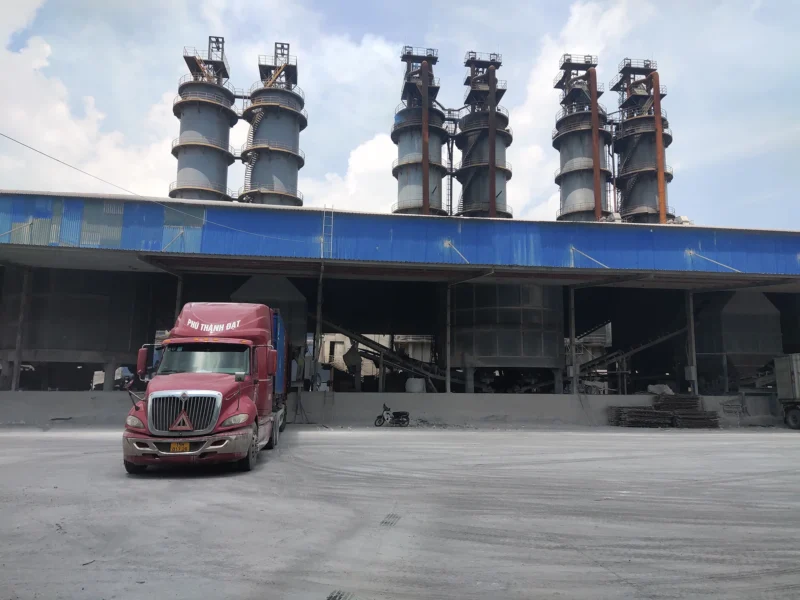
The lime industry is entering a period of expanding opportunity as demand from steelmaking, construction, water treatment, mining, chemicals and environmental applications continues to diversify. For producers with access to high-quality limestone and efficient production technology, this diversification creates opportunities to move beyond traditional commodity markets and develop higher-value products.
Steel remains a major demand driver
Steel production is one of the most important markets for quicklime. In both basic oxygen furnaces (BOF) and electric arc furnaces (EAF), quicklime acts as a flux and helps remove impurities such as silica, phosphorus and sulfur through slag formation. Lime quality can therefore influence steelmaking efficiency, slag quality and overall production costs.
For lime producers, this creates opportunities to establish long-term supply contracts with steel mills, particularly where producers can guarantee consistent CaO content, low impurities, suitable reactivity and reliable delivery.
Water treatment and environmental applications offer growth
Another important opportunity is the environmental sector. Hydrated lime and quicklime are widely used for pH adjustment, wastewater treatment and treatment of acidic industrial streams. Lime is also used in flue-gas treatment and other pollution-control applications.
As industrial facilities face increasing environmental requirements, producers can potentially capture additional value by supplying specialized grades of lime rather than competing only on price.
Mining creates another attractive market
Mining and metallurgy can provide significant opportunities for lime suppliers. Lime is used for pH control, mineral processing and treatment of acidic streams. This makes mining operations potential customers for both quicklime and hydrated lime.
For producers located close to mining regions or ports, developing dedicated logistics and bulk-delivery capabilities could strengthen their competitiveness.
Vietnam has particular potential
Vietnam is well positioned to participate in the regional lime market because of its limestone resources and growing industrial base. Recent industry analysis identifies steel, construction, water treatment, mining and chemical manufacturing among the principal applications for industrial lime in Vietnam.
Vietnam also has potential as an export supplier. A recent industry document notes that countries with abundant limestone resources and competitive production costs can have an advantage in international lime markets, while identifying Vietnam as having strong potential because of its limestone reserves.
Higher-value products can improve margins
One of the biggest opportunities for producers is to move from standard bulk lime toward products designed for specific industrial applications.
Potential product segments include:
- High-calcium quicklime
- Hydrated lime
- Metallurgical-grade lime
- High-reactivity lime
- Low-impurity lime
- Fine-particle hydrated lime
- Agricultural lime
- Specialty lime for water treatment
- Lime for mining and mineral processing
This approach can reduce dependence on a single customer group and potentially create higher margins through product specialization.
Export opportunities are increasing
For producers seeking international customers, markets with strong steel, mining, chemical, construction and environmental industries can offer opportunities. However, export competitiveness depends heavily on product consistency, purity, particle size, reactivity, packaging and logistics costs.
Because lime is relatively bulky and transportation can represent a significant part of delivered cost, producers should prioritize markets that can be served efficiently by nearby ports or established bulk-logistics routes.
Energy efficiency will become increasingly important
Lime production is energy-intensive, making kiln efficiency one of the most important factors affecting production costs and competitiveness. Modernization, automation, waste-heat recovery, alternative fuels and other energy-efficiency measures can help producers reduce operating costs while responding to increasing pressure to lower emissions.
Outlook
The opportunity for lime producers is no longer limited to simply producing more tonnes. The strongest prospects may come from combining reliable limestone resources with efficient kilns, consistent quality, specialized products and strong logistics.
For Vietnamese producers in particular, the combination of limestone availability, domestic steel and industrial demand, and access to Asian export markets provides a foundation for expansion. Companies that can offer stable quality, competitive pricing and dependable long-term supply are likely to be better positioned to win industrial customers.
In short, the next stage of growth for lime producers will be driven by diversification: steel, water treatment, mining, chemicals, construction and environmental applications can each become important revenue streams, while higher-value lime products can help producers move beyond price-based competition.